
Partnership for Peace Consortium of Defense Academies and Security Studies Institutes Home

Partnership for Peace Consortium of Defense Academies and Security Studies Institutes

  • Request new password
  • Login with PKI
Log in with CAC
Forgot Password?
  • Home
  • News
  • Activities
    • Defense Education Enhancement Program (DEEP)
    • Combating Terrorism (CT-WG)
    • Defense Education Development Working Group (EDWG)
    • Regional Stability in South East Europe (RSSEE-SG)
    • Regional Security in the South Caucasus Study Group (RSSC-SG)
    • Emerging Security Challenges Working Group (ESCWG)
    • Journal Connections
  • Products
  • About
  • GlobalNET LMS
  • Partnership for Peace Consortium of Defense Aca...
  • Partnership for Peace Consortium and Uzbekistan...

Partnership for Peace Consortium and Uzbekistan Armed Forces Academy cooperating on defense education
Print Share Download PDF
0 comments

defense_education_-_uzbekistan.jpg

Defense Education - Uzbekistan
From PfPC | anonymous | 25 Mar 2015

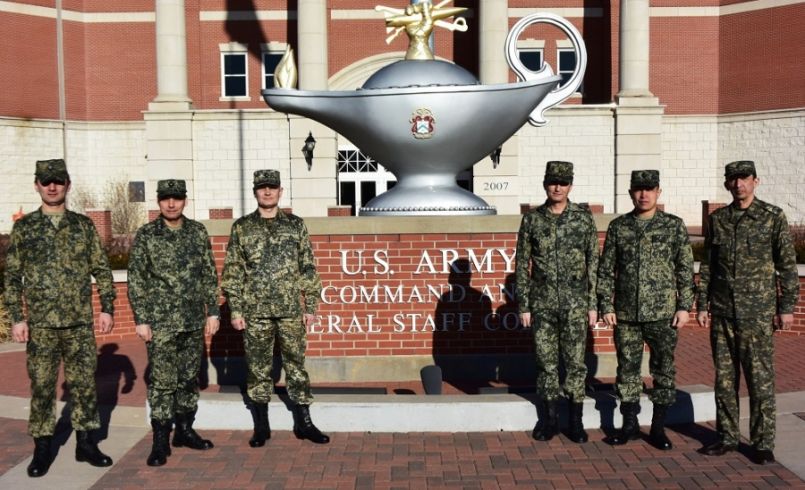
Fort Leavenworth, Kansas (Mar 12, 2015) – With US and NATO forces drawing down in Afghanistan, Uzbekistan and other countries in the region may find themselves playing larger roles in regional security. It is with this realization in mind that Uzbekistan is cooperating with the Partnership for Peace Consortium (PfPC) on defense education assistance through the Defense Education Enhancement Program (DEEP). From 2-12 March six Uzbek members of the Uzbek Armed Forces Academy (AFA) participated in a faculty immersion at the US Command and General Staff College (CSGC). The Uzbek faculty learned from their CSGC counterparts how to plan brigade-level exercise, incorporating lessons learned from the US’s experience in Afghanistan. As US and NATO forces draw down in Afghanistan, such educational exchanges help the faculty at the Uzbek AFA develop soldiers with decision making skills that will translate to Uzbekistan’s effectiveness in contributing to regional security. The DEEP program, jointly managed by the PfPC and NATO, was initiated in 2007 in response to efforts of former Soviet Union states to transform their defense institutions. Uzbekistan has been involved in the DEEP program since 2013. DEEP serves as an important means to foster relationships between Uzbekistan and NATO members and contributes to the development of Uzbekistan’s capabilities to support regional stability. As the PfPC, Marshall Center, and NATO look to the future of DEEP, they envision a converging of norms. In the words of James Appathurai, NATO’s Deputy Assistant Secretary General for Political Affairs and Security Policy, “Our readiness to tackle new and diverse threats and challenges in the future will only be as strong as our commitment today to building like-minded doctrinal standards among our educational commands. These common threads will enable us to continue to stand by one another in partnership and cooperation.”
Education and Training
See all tags »

Associated Files

Related Stories

KZ DEEP 2015
Education and Training
Kazakhstan Leading the Way in Defense Education
UA MoD
Education and Training
Ukrainian Ministry of Defense innovates classroom learning methods
See all related stories »
 

About PfPC

The Partnership for Peace Consortium (PfPC) of Defense Academies and Security Studies Institutes is a voluntary association of institutes of higher learning in defense and security affairs. Linking over 800 defense academies through a network of educators and researchers by sharing best practices and developing concrete solutions to common challenges.


About PfPC

Find us on Social Media

Footer: About GlobalNET

GlobalNET represents a network of organizations and their representative members who are working to foster national and international collaboration as well as to maintain relationships, and strengthen partner capacity.

Footer: GlobalNET Main Links

  • About GlobalNET
  • Contact GlobalNET
  • GlobalNET Partners

Footer: GlobalNET Partner

These are the GlobalNET partners

GlobalNET Support

  • Frequently Asked Questions
  • Help Desk
  • How to use GlobalNET
  • Privacy Policy
  • Terms of Use
  • Accessibility